
Navigating Change Through Effective Communication in Aged Care and Health Care
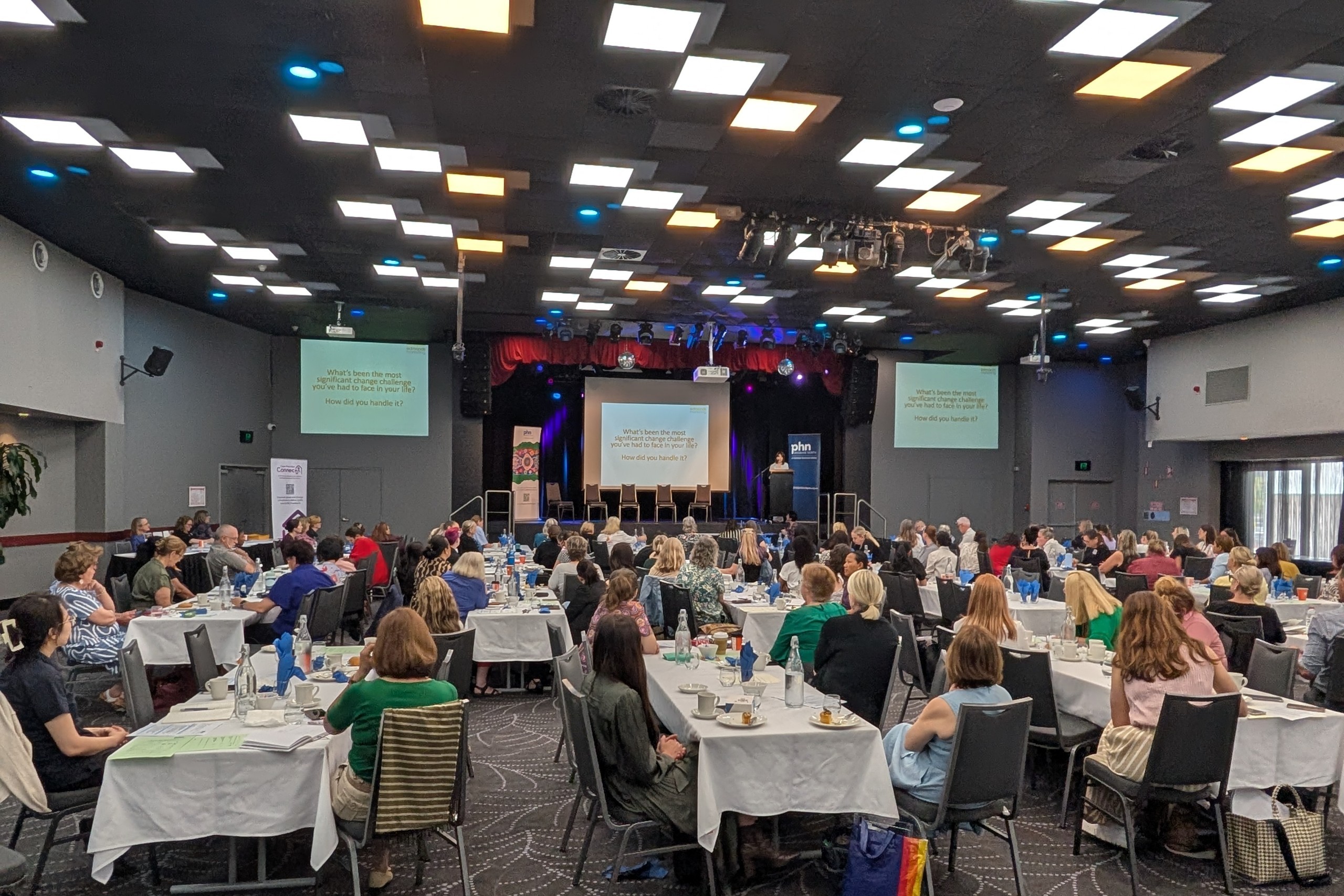
This article is a condensed version of Sophy Edmonds’ presentation at the Brisbane North Primary Health Network (PHN) Aged Care Forum in October 2025.
Change is constant in health care and aged care. From regulatory reform to workforce pressures, mergers, digital transformation, and rising consumer expectations, organisations face multiple, overlapping shifts at once. Navigating this complex environment requires thoughtful leadership and strategic communications.
I’ve spent over 25 years leading strategic communications programs in both the UK and Australia supporting health and aged care organisations through reform, cultural transitions and sector repositioning. One lesson stands out – change isn’t a single event: it affects people emotionally, mentally and operationally. Ignoring the human dimension risks disengagement, resistance and loss of trust.
Understanding Change and Its Impact
Change occurs across multiple dimensions:
- Strategic change – shifts in organisational priorities to adapt to new policies or market forces.
- Structural change – mergers, acquisitions, or new reporting lines.
- Process-oriented change – new workflows, systems, or compliance requirements.
- People-centered change – evolving roles, responsibilities, and team structures.
Oftentimes, health and aged care organisations juggle all four simultaneously. Recognising this helps leaders plan more effectively rather than assuming change affects only one area at a time.
Client Example: A regional aged care provider recently merged with a larger provider. Staff were adapting to new reporting lines, digital care systems, and revised care protocols all at once. By establishing structured communication channels, weekly update meetings, and targeted support for each team, we helped maintain engagement and reduce turnover during this challenging period.
Change fatigue is real. Staff often feel exhausted by constant transitions, and organisations may struggle with resistance, low morale, and high turnover. Understanding and addressing these human impacts is critical for sustaining engagement and resilience.
Leading in a VUCA Environment
Health care and aged care operate in a VUCA world — Volatile, Uncertain, Complex, and Ambiguous. These conditions make predicting outcomes difficult and can create confusion. Leaders can reframe VUCA as an opportunity to strengthen communication:
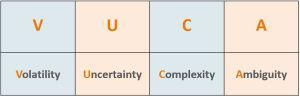
- Volatility → Vision: Provide clear direction and purpose to reduce uncertainty.
- Uncertainty → Understanding: Listen actively and help teams make sense of evolving circumstances.
- Complexity → Clarity: Simplify messaging and focus on what truly matters.
- Ambiguity → Agility: Remain flexible and adaptable as new information emerges.
Engaging people’s heads, hearts, and hands ensures change is understood cognitively, embraced emotionally, and enacted practically. Clear vision, empathy, and practical support help teams move from uncertainty to confidence and action.
Client Example: During a major change program for the UK Department of Health, the division was initially in disarray — leadership was unclear, teams were focused on day-to-day work and new recruits were struggling to support the reform agenda. After a new leader was appointed, structured weekly meetings, open communication, and collaborative planning created clarity and focus. The team shifted from confusion to a coordinated, confident effort delivering the reform successfully while maintaining engagement and trust.
Principles for Effective Change Communications in Health and Aged Care
- Vision – Articulate why change is happening and how it aligns with the organisation’s mission. Make the purpose meaningful, relevant, and relatable.
- Understanding – Know your audience, listen actively, and respond thoughtfully. Address concerns and motivations to guide people effectively.
- Clarity – Simplify messages, align communication across teams, use multiple channels, and repeat key points strategically. Undercommunicating is riskier than overcommunicating.
- Agility – Change is rarely linear. Monitor progress, gather feedback, adjust actions, and refine communication continuously. Agile communication builds trust and ensures responsiveness to emerging needs.
Client Example: While supporting an aged care provider through the introduction of a change program, we mapped key stakeholders to understand who needed close engagement versus regular updates. By tailoring communications and providing clear guidance, we facilitated staff and residents to adapt more confidently, allowing the implementation to proceed smoothly.
Conclusion: Leading Health and Aged Care Organisation Through Change
Effective change leadership is about creating confidence, connection, and capability. It transforms a complex, VUCA environment into one where teams understand the purpose, feel supported, and know how to act.
Health care and aged care organisations that communicate intentionally, listen actively and adapt continually are better positioned to navigate uncertainty — and ultimately deliver improved outcomes for clients, staff, and communities.
What this means for your organisation
If your organisation is navigating change — whether regulatory reform, growth, workforce pressure, or repositioning — clear, purposeful health and aged care communications are not optional. They are foundational to trust, engagement, and successful outcomes.
I work with aged care and healthcare leaders to deliver strategic aged care communications and health care communications that bring clarity to complex change, strengthen organisational positioning, and support confident decision-making.
You can learn more about Edmonds Marketing’s Strategic Approach to helping aged care and health care clients navigate change with clear direction – here.
If you’d like to discuss how this could apply to your organisation, I welcome a conversation.
Get in touch to explore what’s possible.